
Startups
IS JAMAICA READY FOR MUSIC 2.0?

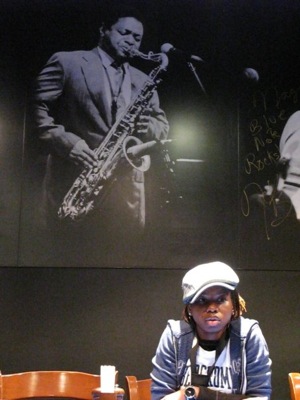 On Feb 5th, I entered the Globe Lobby of the Los Angeles Times Building in downtown Los Angeles as the only Caribbean representative at the 2nd annual EconMusic Conference, organized by UK based ContentNext Media. This year’s conference focused on the key strategic issues surrounding the economics of the digital music industry.
By the end of the first panel discussion which featured Courtney Holt (President, Myspace Music), David Ring (EVP, eLabs, Universal Music Group), Cory Ondrejka (SVP, Digital Strategy, EMI Music), Michael Spiegelman (Head of Yahoo! Music) and Chris Stephenson (GM, Global Marketing, Entertainment Business, Microsoft) I had to wonder whether Jamaica and by extension the Caribbean region was ready for the technologically driven strategies that industry players are implementing in order to remain competitive in the global music industry.
MUSIC 2.0?
Technology and music are much more intertwined than ever before and to become or remain competitive in the marketplace, ALL industry players MUST experiment with new technologies, new business models, and take on partnerships with providers of music hardware and software in order to satisfy the call for “ubiquity of music.”
The term “Music 2.0” (coined by Gerd Leonhard) correctly describes the nature of today’s music business, driven by digital, web-based strategies that allow consumers to access, acquire and interact with music in ways not previously available.
NEW BUSINESS MODELS
The Music 2.0 landscape has acted as a category 5 hurricane in the music business because it has allowed for the introduction of new players such as Live Nation (the largest booking agency for live shows in the world) and thousands of independent labels utilizing digital distribution strategies and forcing major labels to revisit their outdated business models.
David Ring from Universal Music Group and EMI executive Cory Ondrejka discussed the relevance of any single business model that could satisfy the needs of artists, labels, publishers and consumer. But the discussion proved that even the members of the “Big 4” (Sony, UMG, WMG and EMI) have no exact answer for a “best business model” and they are unable to predict with any level of certainty what type of model would stabilize the industry and technology in which form would rule supreme.
Major labels at this point have simply preferred to take on a slight experimental approach (allowing themselves just enough wiggle room to hold on to their massive 75% dominance in the music industry). Their only suggestion was that any player in the music industry must try to ADAPT to the dynamic changes.
Are players in the Caribbean ready to adapt? Or will we simply follow the lead of foreign entities and try to make their strategies work in our region and for our music? This may be much more than detrimental than we think.
Fred Croshal founder and CEO of Croshal Entertainment Group (www.croshalgroup.com) and former executive at SonyBMG and Maverick Music was a refreshing addition to the conference introducing his alternative business model, what he calls, the VIRTUAL RECORD LABEL. According to Croshal, who has been involved with the sale of over 100 million albums over his 30 year span in the music business “…the structure of the label gives the artist 100% ownership of their masters and allows for faster reaction time, lower costs and better results for the artist.” Croshal’s label provides the same services an artist would receive at a major label: sales, marketing, song placement, internet, publicity, budget management but there are no costly overheads to recoup. Could this model be the way of the future?
Croshal represents American Idol winner Rubben Studdard, RnB star Yamin Elliot, Jupiter Rising, Jackson Browne and numerous other hugely successful American acts.
Will Jamaican artists continue to look to the “Big 4” for deals when most major acts like Madonna, Janet Jackson, Jay Z, Nickelback, and Bruce Springsteen are moving away from them driven by a desire to actually “own” their music?
MYSPACE MUSIC AHEAD OF THE GAME
Courtney Holt, newly appointed President of Myspace Music and former EVP of Digital Music & Media at MTV Networks, delved into developments at the new arm from Myspace. Privately funded and driven by advertising revenue, and sponsorship, Myspace Music is an expansion of the different ways that members of the Myspace community can interact with artists and discover new music. They have come out ahead of the pack in terms of exploiting the social networking model to expand the reach and popularity of an artist and their music.
Myspace Music has several Jamaican artists listed under their Reggae category but so far none have been a featured artist or offered a deal for “secret shows” such as those received by 23-year-old British artist, Lilly Allen (3 secret shows on 3 continents). According to Holt, these “secret shows” have driven record sales for these artists in the hundreds of thousands. MySpace Music launched the Secret Shows franchise in January 2006 and has since hosted such acts as Rilo Kiley, Moby, Maroon 5, the Killers, the Yeah Yeah Yeahs, Tenacious D, Ice Cube, James Blunt and Neil Diamond in cities around the world.
MOBILE MUSIC DEVELOPMENTS |SUBSCRIPTION SERVICES
Even before XM and Sirius radio entered the market, several companies such as Yahoo! Music and Rhapsody had experimented with subscription offers for music consumers. All that have trekked this road have later on abandoned the idea. When I pressed Chris Stephenson from Microsoft about the need for change in consumer perception as it relates to music as a product, he agreed that there is a need to shift consumer perception from “ownership of music” to “access to music.”
If consumers continue to view music as a product to be physically owned, there will always be resistance to paying a monthly service charge to access music.
TICKETING
In Japan today, music lovers are able to purchase concert tickets directly from their mobile phones. I directed this question to members of the Mobile Music panel: Jeff Annison (Founder & CEO, Underground Labs), Daniel Cohen (VP, Business Development, Dada Entertainment) and Tom Conrad (CTO, Pandora) who all agreed that very soon mobile phone companies in the US will be following suit to possibly partner with event promoters or ticketing agencies such as TicketMaster and Live Nation, as this is a viable option in the market of bringing artists closer to their fanbase.
Jamaica has Island Stubs (www.islandstubs.com) is this a viable option for us as well? Have their executives started negotiations with entities in the mobile arena to possibly provide such a service?
THE DEATH OF THE CD
Currently, Microsoft is heading into a deal with BestBuy to offer preloaded ZUNES based on music that consumers like. Do we foresee any of these ZUNES being preloaded with Reggae/Jamaican/Caribbean music?
At this point the deal is being inked between Microsoft and the major labels, with Universal being a big fan of the idea. This move is a reflection of an effort on the part of record labels to utilize “recommendation technology” and “play catch up” to what other entities like Amazon and iTunes have been doing for years to better understand the needs of consumers. In addition to the massive 45% decline in CD sales since 2000, this ZUNE agreement signals the ever-nearing “death of the CD.”
Is VP Records and local acts who are still thinking of “pressing a CD” ready for this move? What plans does Record Plaza, Music Mart, Derek Harriott, CD Centre, Music Fair, and others have in store for Jamaican music consumers when the CD is out of the picture?
During the conference there was mention of many who stand to benefit from this new dynamism and the falling of old business models but is the Caribbean region technologically ready?
By the end of all the presentations I left the LA Times Building feeling that without the necessary technological infrastructure Jamaica and the Caribbean will most definitely be left behind in the shift to MUSIC 2.0.
If you liked this post, why not Subscribe and get Silicon Caribe Today by Email







-
Trends16 years ago
376,580 Trinidadians now on Facebook, 40% of their population Online.
-
Trends16 years ago
Jamaicans pour unto Facebook 429,160 now on the social network
-
Trends16 years ago
JamaicaObserver.com steps it up again with Social Media Plugins
-

 eCommerce3 years ago
How Amazon.com Shipped Directly To My door in Jamaica, Finally!
Pingback: Reggae.com a great resource, a hellish surfing experience |
Pingback: Caribbean-entrepreneur.com Business Network