
FinTech
Jamaica Is Finally Opening the Door to Crypto Regulation. We’ve Been Knocking since 2018.


Here’s what it means, and how we got here.
Jamaica’s financial sector just reached a defining milestone, as initially reported by the Jamaica Observer.
On June 11, 2026, the Financial Services Commission (FSC) opened public consultations on a proposed licensing regime for Virtual Asset Service Providers – exchanges, custodians, brokers, advisers, wallet providers, and conversion services. Six license classes. A J$16 million minimum capital floor. Quarterly, independently audited proof of reserves for trading platforms and custodians. The window closes on July 10.
It is Jamaica’s most significant move yet toward a formal legal framework for cryptocurrency businesses operating on the island.
For most people, this reads like the beginning of Jamaica’s crypto story. It isn’t.
For SiliconCaribe readers, it’s the next chapter in a conversation we’ve been documenting – and helping shape – for nearly a decade.
We Saw This Coming
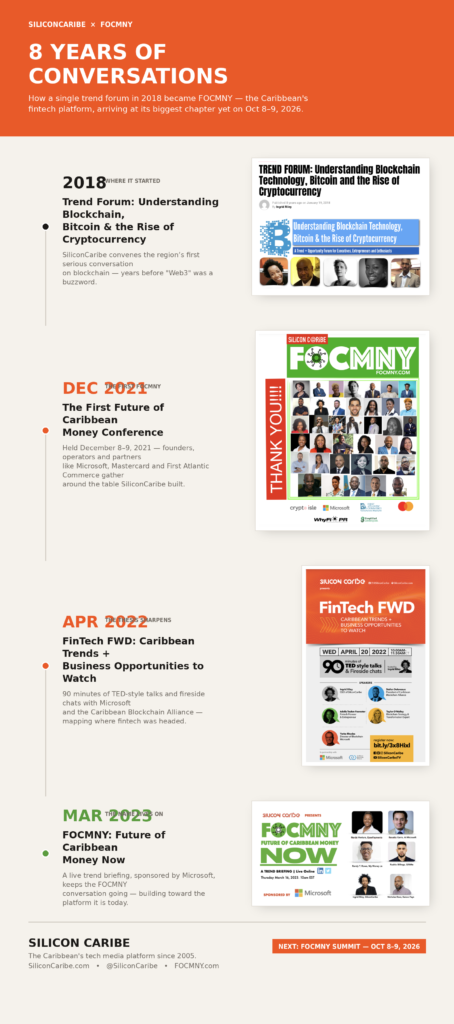
In January 2018, SiliconCaribe hosted Jamaica’s first public Bitcoin and cryptocurrency trend forum – Understanding Blockchain Technology, Bitcoin, and the Rise of Cryptocurrency at the JAMPRO HQ at a moment when most of the world still treated Bitcoin as a fringe experiment.
In 2021, we expanded that conversation regionally with The Future of Caribbean Money (FOCMNY) two-day conference, launched in partnership with Bahamian Startup Crypto Isle, dedicated to how fintech, CBDCs, cryptocurrency, remittances, stablecoins, and digital payments would reshape Caribbean finance. It was held in the Bahamas and online. In 2023, we produced a half-day online trend forum with Microsoft. Each time, we put front and center the early Caribbean adopters and disruptive innovators.
Those conference-stage conversations are now moving into regulatory policy. The dialogue has shifted from if to how -and that shift is the whole story.
The Caribbean Has Been the Region to Watch
The biggest misconception about crypto is that the innovation happened in North America or Europe. In reality, the Caribbean quietly became one of the world’s most interesting regulatory laboratories – years before Jamaica’s consultation opened.
- 2021: Cuba formally moved to recognise and regulate cryptocurrency for commercial transactions – an early case of state-sanctioned digital asset use, driven by banking restrictions and remittance bottlenecks.
- 2022: Small Caribbean nations – The Bahamas, Antigua, and others – became magnets for offshore crypto exchanges seeking friendly jurisdictions and regulatory sandboxes.
- Late 2022: Over 15 major U.S. consumer brands operating across the Caribbean were already accepting crypto payments or piloting Web3 loyalty programs, creating bottom-up pressure on local banks and regulators to catch up.
Typically, regulation follows markets. It doesn’t lead them. Consumers weren’t waiting for governments. Businesses were experimenting. Developers were building. By the time Jamaica opened its consultation, the region had already answered the question of whether – the only question left was how well.
The numbers backed it up.
Jamaican banks processed over USD$57million worth of crypto-related transactions between 2021 and 2025, says Bank of Jamaica
Added that, when we published Top 8 Caribbean Crypto Countries in January 2022, Triple-A’s data showed the region already had over 214,000 crypto owners, with Haiti (107,752 users) and Jamaica (39,214 users) leading Caribbean adoption. That wasn’t random. Haiti and Jamaica also had two of the highest remittance-to-GDP ratios in the hemisphere – 23.18% and 23.6% respectively – and crypto remittances were, even then, running roughly 388 times faster and 127 times cheaper than traditional transfer services.
Large diaspora populations, heavy reliance on money sent home, and high transfer fees is exactly the profile that makes crypto adoption structural rather than speculative. The countries with the most to gain from cutting out remittance middlemen were the countries where users showed up first. Regulators are only now catching up to a pattern the transaction data made obvious years ago.
Why the Offshore Rush Forced Jamaica’s Hand
The same offshore exchange migration that brought capital and attention to the region also exposed the risk of regulatory gaps – systemic exposure for investors operating in jurisdictions with little oversight. For a mature financial hub like Jamaica, proactive, institutional-grade regulation is safer than ad-hoc operation after the fact.
That’s the logic behind the FSC’s approach. Rather than start with a lighter registration model, which several jurisdictions that tried it later found inadequate for managing money-laundering and consumer-protection risk, eventually being forced to convert to full licensing at high cost, Jamaica is starting where those jurisdictions ended up: fitness-and-propriety checks, prudential and conduct rules, and continuous supervision from day one.
Inside the FSC Proposal
The framework, built on a consultation paper plus three supporting instruments, sets clear guardrails:
- Mandatory licensing. No entity can offer virtual asset services, token issuances, or exchange platforms in or from Jamaica without FSC approval- a separate license required for each class of activity, open only to Jamaican-incorporated companies, not individuals.
- Six license classes, covering trading platforms, custody, broker-dealing, advisory, wallet services, and conversion.
- Capital and reserves. A minimum paid-up capital of J$16 million, with exchanges and custodians required to run quarterly, independently audited proof-of-reserves checks.
- AML/CFT and investor protection. Enhanced anti-money laundering controls, “fit and proper” checks on executives, segregated client accounts, and – for securities dealers introducing digital tokens – quarterly performance disclosures and signed investor risk declarations.
- Timing isn’t accidental. The move follows a wave of international failures in the virtual asset sector and sustained pressure from the Financial Action Task Force, whose standards expect countries to license or supervise VASPs effectively.
Why It Matters
This consultation isn’t an endorsement of cryptocurrency/virtual assets. It’s rules for an industry that already exists – greater consumer protection, licensing clarity for exchanges and service providers, stronger AML safeguards, and the institutional confidence that lets banks, fintech founders, and investors build on solid ground instead of a gray zone.
Innovation thrives when entrepreneurs know the rules of the game. Jamaica didn’t lead the global regulatory conversation. But it’s now joining an important regional movement – recognising digital assets as part of modern financial infrastructure, the way mobile and digital payments were a decade ago.
What Comes Next
The consultation period is only step one. What Jamaica builds from it will determine whether the country becomes a jurisdiction that attracts legitimate fintech innovation and a regional hub for compliant virtual asset business – or just another country reacting late to a technology that matured elsewhere.
The opportunity here is bigger than cryptocurrency/virtual assets. It’s about where Jamaica sits in the next generation of digital finance.
When we launched The Future of Caribbean Money in 2021, the goal was simple: put regulators and legacy financial institutions on notice about what was already happening, and what they should consider: how digital assets could unlock regional prosperity, cut cross-border friction, and drive financial inclusion. Jamaica’s FSC opening the door to VASP regulation proves the dialogue has finally caught up.
SiliconCaribe will keep tracking this consultation as it moves from proposal to policy – not just for Jamaica, but for the whole Global Caribbean innovation economy.
The Next Future of Caribbean Money Event is happening soon.
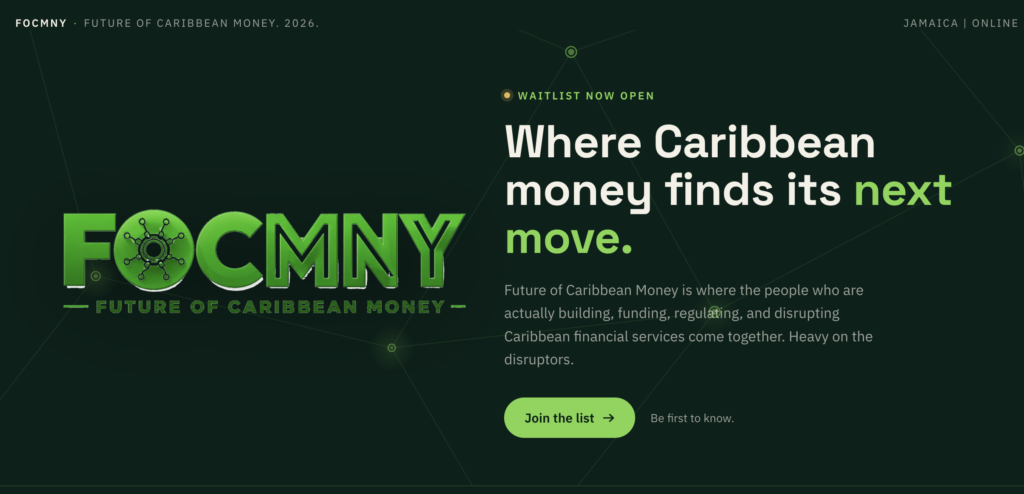
Join the WaitList to know the dates, agenda, sponsors, and ticket details. In 2026, Future of Caribbean Money is where the people who are actually building, funding, regulating, and disrupting Caribbean financial services come together. Heavy on the disruptors.
Ingrid Riley is the Founder & Chief Writer of this globally syndicated SiliconCaribe® blog. She is an award-winning entrepreneur who produces Events. Media. Communities. Platforms for the Global Caribbean Tech & Innovation Economy.
Never miss an event, profile, or story about the global Caribbean tech and Innovation Economy. Subscribe to the free SiliconCaribe Weekly newsletter.





-
Trends16 years ago
376,580 Trinidadians now on Facebook, 40% of their population Online.
-
Trends16 years ago
Jamaicans pour unto Facebook 429,160 now on the social network
-
Trends16 years ago
JamaicaObserver.com steps it up again with Social Media Plugins
-

 eCommerce3 years ago
How Amazon.com Shipped Directly To My door in Jamaica, Finally!