
Digital Trends
She Built the Bank Account Caribbean Freelancers Were Never Supposed to Have

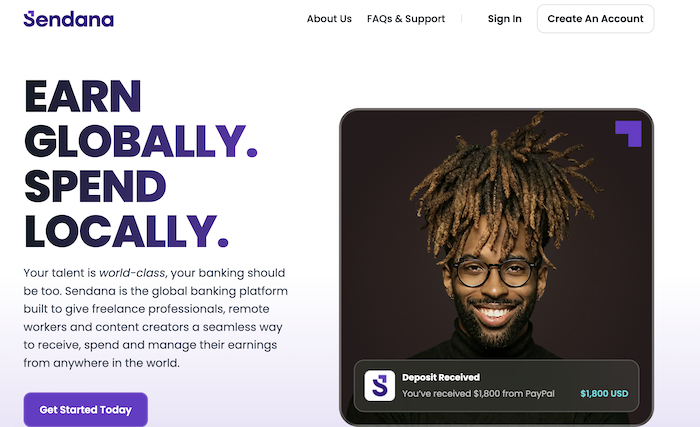
A new borderless banking platform just launched, and in its first week, hundreds signed up without a single ad.
For millions of freelancers, remote workers, and digital creators across the Global South, the internet opened the door to global opportunity. But there has always been a problem hiding behind the opportunity: getting paid.
A graphic designer in Jamaica working with a client in New York. A virtual assistant in Barbados supporting a startup in California. A creator in India earning from international platforms. The work is global. The payments are not.
There’s a quiet tax that millions of Caribbean freelancers, remote workers, and content creators pay every month. Not to any government. Not as part of a contract. Just the cost of being in the wrong geography when global digital work pays out. Wire transfer fees. Days of waiting. Payment platforms that simply don’t support your country. For a freelance virtual assistant earning $1,000 USD a month, two transfers per month at roughly $50 each means $100 gone- 10 percent of income-just to access money already earned.

Monique Powell built Sendana to fix that.
What Sendana Is
Launched May 28, 2026, Sendana is a borderless banking platform designed specifically for freelancers, remote workers, and content creators across the Global South -including the Caribbean, parts of Africa, and parts of South Asia.
The core product: a virtual US bank account that anyone can open with just a local government-issued ID. No US address. No American Social Security number. No impossible paperwork. Once set up, users can receive US ACH and wire transfers, pull funds from platforms like PayPal and Upwork, and access their money through a Sendana Visa card or cash pickup at over 400,000 MoneyGram locations worldwide. Transfers move near-instantly and at up to 90 percent lower cost than conventional channels.
The Demand Was Already There
Within days of launching – with zero paid advertising – Sendana had hundreds of users registered. That’s not a marketing story. That’s a market signal.
The Caribbean has a growing cohort of highly skilled digital professionals: developers, designers, virtual assistants, marketers, writers, consultants – people doing real, quality work for clients in the US, UK, Canada, and Europe. The infrastructure to support them has been conspicuously absent. Sendana didn’t create demand. It showed up where demand had been waiting.
The Founder Building the Bridge
Sendana is led by Monique Powell, a two-time founder with experience across technology, banking, UX engineering, and marketing. Before Sendana, Powell scaled a food and grocery delivery platform to more than 60,000 users. She also previously led digital marketing across 17 countries as regional marketing manager at Scotiabank – a background that sits squarely at the intersection of financial services, technology, and consumer behavior.
“For too long, talented people in underserved regions have been held back from fully participating in the global economy,” Powell said. “The demand we saw within days of launch, without a single dollar in ad spend, tells me the market has been ready and waiting for this.”
Built on the Future of Money
Sendana’s development was backed by DraperU Ventures and the Stellar Development Foundation. The Stellar backing is notable: its stablecoin rails are built for exactly this use case – fast, low-cost cross-border value transfer to markets that traditional banking has deprioritised. The platform operates in over 150 countries. Direct transfers to local bank accounts are coming soon. For now, the Visa card and MoneyGram cash pickup give immediate, real-world utility.
Sendana is not a bank – all banking, card issuing, and local cash payout services are provided by licensed partners.
A Caribbean and Global South Opportunity
The Caribbean digital workforce is real, growing, and has been systematically underserved by global payments infrastructure. Every dollar lost to wire fees is capital that doesn’t get reinvested in a local economy. Every day of waiting on a transfer is cash flow uncertainty for someone running a small operation.
Remote work has created a new export industry: talent. Developers, designers, marketers, virtual assistants, consultants, and creators are selling services globally, but the infrastructure around them must evolve. The next generation of economic growth will not only come from physical exports. It will come from exporting skills. And that requires financial systems designed for borderless work.
Sendana is a structural fix to a structural problem. The launch is early. The product will evolve. But the signal from week one is clear: hundreds of thousands of Caribbean professionals have been waiting for exactly this. Some of them signed up before Sendana spent a single dollar telling them it existed. That’s a company worth paying attention to.
Monique Powell has been part of the Kingston BETA tech community for over a decade. We connected her to our global network and her own obvious credentials, and she went on to TechStars Atlanta/New Orleans, which opened further doors. We are proud that she is one of us – and that she is building something big for us and for the world.






-
Trends16 years ago
376,580 Trinidadians now on Facebook, 40% of their population Online.
-
Trends16 years ago
Jamaicans pour unto Facebook 429,160 now on the social network
-
Trends16 years ago
JamaicaObserver.com steps it up again with Social Media Plugins
-

 eCommerce3 years ago
How Amazon.com Shipped Directly To My door in Jamaica, Finally!